- 0.1支路变量、元件、KCL和KVL 数学基础知识(Math basics for circuits)(1)
- 0.2数学基础知识(Math basics for circuits)(2)
- 0.3数学基础知识(Math basics for circuits)(3)
- 0.4数学基础知识(Math basics for circuits)(4)
- 0.5数学基础知识(Math basics for circuits)(5)
- 0.6数学基础知识(Math basics for circuits)(6)
- 0.7数学基础知识(Math basics for circuits)(7)
- 1.1为什么要学习电路(why learn circuits_) 为什么要学习电路(why learn circuits_)(1)
- 1.2为什么要学习电路(why learn circuits_)(2)
- 2.1电路(circuits) 电路(circuits) 1电路(circuits) 电路(circuits)(1)
- 2.2电路(circuits) 电路(circuits) (2).
- 3.1支路变量(branch variables) 支路变量(branch variables) (1)
- 3.2 支路变量(branch variables) (2).
- 3.3支路变量(branch variables) (3)
- 3.4 支路变量(branch variables) (4)
- 3.5支路变量(branch variables)
- 3.6支路变量(branch variables)
- 4.1 参考方向(reference direction) 参考方向(reference direction)
- 5.1功率(power) 功率(power)
- 6.1 电阻(resistor) 电阻(resistor)
- 6.2电阻(resistor)
- 7.1 独立电源(independent source)(1)
- 7.2 独立电源(independent source)(2)
- 7.3 仿真1(simulation1)
- 8.1 端口(port)
- 9.1 受控元件(dependent elements)(1)
- 9.3 受控元件(dependent elements)(3)
- 9.4 仿真2(simulation2)
- 10.1 基尔霍夫定律(KCL KVL) 基尔霍夫定律(KCL KVL)
- 10.2基尔霍夫定律(KCL KVL)
- 10.3基尔霍夫定律(KCL KVL)
- 10.4基尔霍夫定律(KCL KVL)
- 11.1 2B法(2B method) 2B法(2B method)
- 12.1电阻、电源的等效变换(Equivalent transform for resistors and sources) 电阻的串并联(serial pa
- 12.2电阻的串并联(serial parallel resistors)
- 12.3电阻的串并联(serial parallel resistors)
- 12.4电阻的串并联(serial parallel resistors)
- 13.1 平衡电桥(bridge) 平衡电桥(bridge)
- 13.2电桥实验
- 14.1 Y-Δ变换(Y-Δ transform) Y-Δ变换(Y-Δ transform)
- 14.2Y-Δ变换(Y-Δ transform)
- 15.1 二端网络的等效电阻(equivalent resistance of two-terminal network) 二端网络的等效电阻(equivale
- 16.1电源的等效变换(equivalent transform for sources) 电源的等效变换(equivalent transform for s
- 16.2电源的等效变换(equivalent transform for sources)
- 16.3电源的等效变换(equivalent transform for sources)
- 17.1最大功率传输(maximum power transfer) 最大功率传输(maximum power transfer)
- 18.1运算放大器(Op Amps) 运算放大器(Op Amps)
- 19.1运算放大器模型(Op Amps model) 运算放大器模型(Op Amps model)(1)
- 19.2运算放大器模型(Op Amps model)(2)
- 19.3运算放大器模型(Op Amps model)(3)
- 19.4仿真3(simulation3)
- 20.1理想运算放大器(ideal Op Amp) 理想运算放大器(ideal Op Amp)
- 21.1 第21讲 运算放大器的应用 运算放大器的应用(applications of Op Amps)(1)
- 21.2运算放大器的应用(applications of Op Amps)(2)
- 21.3运算放大器的应用(applications of Op Amps)(3)
- 21.4运放电流源实验
- 22.1 数字系统介绍(digital system —— introduction) 数字系统介绍(digital system —— introductio
- 23.1数字系统——数和逻辑(digital system——number and logic in digital) 数字系统——数和逻辑(digital s
- 23.2数字系统——数和逻辑(digital system——number and logic in digital)(2)
- 24.1金属-氧化层半导体场效晶体管(MOSFET) 金属-氧化层半导体场效晶体管(MOSFET)(1)
- 24.2金属-氧化层半导体场效晶体管(MOSFET)(2)
- 25.1逻辑门(logic gates) 逻辑门(logic gates)(1)
- 25.2逻辑门(logic gates)(2)
- 26.1互补金属氧化物半导体(CMOS) 互补金属氧化物半导体(CMOS)
- 27.1二端口网络(two-port network)(不要求) 二端口网络(two-port network)
- 28.1 G参数(G parameter)(不要求)G参数(G parameter)(1)
- 28.2 G参数(G parameter)(2)
- 29.1其他参数(other parameters)(不要求) 其他参数(other parameters)(1)
- 29.2其他参数(other parameters)(2)
- 29.3其他参数(other parameters)(3)
- 30.1二端口网络的等效电路(equivalent circuits of two-port)(不要求) 二端口网络的等效电路(equivalent circu
- 31.1 二端口网络的连接(connection of two-ports)(不要求) 端口网络的连接(connection of two-ports)(1)
- 31.2二端口网络的连接(connection of two-ports)(2)
- 31.3二端口网络的连接(connection of two-ports)(2)
- 32.1系统化方程解法介绍(introduction to systematic function formulating) 系统化方程解法介绍(introdu
- 33.1节点电压法(node voltage method) 节点电压法(node voltage method)(1)
- 33.2节点电压法(node voltage method)(2)
- 34.1 回路电流法(loop current method) 回路电流法(loop current method)(1)
- 34.2回路电流法(loop current method)(2)
- 34.3回路电流法(loop current method)(3)
- 35.1叠加、替代和戴维南定理 (Superposition substitution and Thevenin ) 叠加定理(superposition t
- 35.2叠加定理(superposition theorem)(2)
- 35.3叠加定理(superposition theorem)(3)
- 35.4叠加定理(superposition theorem)(4)
- 36.1戴维南和诺顿定理(Thevenin_Norton theorem) 戴维南和诺顿定理(Thevenin_Norton theorem)(1)
- 36.2戴维南和诺顿定理(Thevenin_Norton theorem)(2)
- 36.3戴维南和诺顿定理(Thevenin_Norton theorem)(3)
- 36.4戴维南和诺顿定理(Thevenin_Norton theorem)(4)
- 36.5戴维南定理实验
- 37.1戴维南定理的应用(applications of Thevenin theorem) 戴维南定理的应用(applications of Thevenin
- 37.2戴维南定理的应用(applications of Thevenin theorem)(2)
- 37.3戴维南定理的应用(applications of Thevenin theorem)(3)
- 38.1第38讲 替代定理(substitution theorem) 替代定理(substitution theorem)
- 39.1 非线性电阻电路(Nonlinear resistive circuits) 非线性电阻(nonlinear resistor)(1)
- 39.2非线性电阻(nonlinear resistor)(2)
- 40.1非线性电阻电路的方程求解法和图解法(analytical and graphical methods for nonlinear circuits) 非
- 40.2非线性电阻电路的方程求解法和图解法(analytical and graphical methods for nonlinear circuits)(2
- 41.1非线性电路的分段线性法(piecewise linear method for nonlinear circuits)____非线性电路的分段线性法(
- 41.2非线性电路的分段线性法(piecewise linear method for nonlinear circuits)(2)
- 41.3非线性电路的分段线性法(piecewise linear method for nonlinear circuits)(3)
- 41.4 非线性电路的分段线性法(piecewise linear method for nonlinear circuits)(4)
- 41.5非线性电路的分段线性法(piecewise linear method for nonlinear circuits)(5)
- 42.1假设检验法的应用(application of suppose-verify method) 假设检验法的应用(application of suppo
- 42.2假设检验法的应用(application of suppose-verify method)(2)
- 43.1非线性电路的小信号法(small signal method for nonlinear circuits) 非线性电路的小信号法(small sign
- 43.2非线性电路的小信号法(small signal method for nonlinear circuits)(2)
- 43.3非线性电路的小信号法(small signal method for nonlinear circuits)(3)
- 44.1 小信号模型(small signal models) 小信号模型(small signal models)(1)
- 44.2小信号模型(small signal models)(2)
- 44.3小信号模型(small signal models)(3)
- 45.1放大器(amplifier) 放大器(amplifier)
- 46.1 一阶电路(First-Order Circuits) 电容与电感(Capacitors and Inductors)(1)
- 46.2电容与电感(Capacitors and Inductors)(2)
- 46.3电容与电感(Capacitors and Inductors)(3)
- 46.4电容与电感(Capacitors and Inductors)(4)
- 46.5电容与电感(Capacitors and Inductors)(5)
- 47.1动态电路(Dynamic Circuits) 动态电路(Dynamic Circuits)(1)
- 47.2动态电路(Dynamic Circuits)(2)
- 47.3动态电路(Dynamic Circuits)(3)
- 47.4动态电路(Dynamic Circuits)(4)
- 48.1 初值(Initial Values) 初值(Initial Values)(1)
- 48.2初值(Initial Values)(2)
- 48.3初值(Initial Values)(3)
- 48.4初值(Initial Values)(4)
- 49.1一阶电路经典法(Classical Method for First-Order Circuits) 一阶电路经典法(Classical Method
- 49.2一阶电路经典法(Classical Method for First-Order Circuits)(2)
- 49.3一阶电路经典法(Classical Method for First-Order Circuits)(3)
- 49.4一阶电路经典法(Classical Method for First-Order Circuits)(4)
- 49.5一阶电路经典法(Classical Method for First-Order Circuits)(5)
- 50.1 一阶电路三要素法(Three Elements Method for First-Order Circuits) 一阶电路三要素法(Three El
- 50.2一阶电路三要素法(Three Elements Method for First-Order Circuits)(2)
- 50.3一阶电路三要素法(Three Elements Method for First-Order Circuits)(3)
- 50.4一阶电路三要素法(Three Elements Method for First-Order Circuits)(4)
- 50.5仿真4(Simulation 4)
- 51.1 零输入响应和零状态响应(zero input response and zero state response) 零输入响应和零状态响应
- 52.1一阶电路的应用(Applications of First-Order Circuits) 门传输延迟(applications of first-o
- 52.2 门传输延迟(2)
- 52.3 门传输延迟(3)
- 53.1一阶电路的应用之信号_ 运算放大器电路(applications of first- order circuits (signal_ Op Amp ci
- 53.2运算放大器电路(2)
- 53.3运算放大器电路(3)
- 53.4运算放大器电路(4)
- 53.5运算放大器电路(5)
- 54.1 一阶电路的应用之能量_ 整流与斩波 整流与斩波(1)
- 54.2 整流与斩波(2)
- 54.3整流与斩波(3)
- 54.4A1 单位阶跃函数和单元阶跃响应(unit step function and unit step response)(1)
- 54.5A1 单位阶跃函数和单元阶跃响应(unit step function and unit step response)(2)
- 54.6A1 单位阶跃函数和单元阶跃响应(unit step function and unit step response)(3)
- 54.7单位冲激函数(unit impulse function)(1)
- 54.8单位冲激函数(unit impulse function)(2)
- 54.9 A3 单位冲激响应(unit impulse response)(不要求)(1)
- 54.10单位冲激响应(unit impulse response)(2)
- 54.11单位冲激响应(unit impulse response)(3)
- 54.12单位冲激响应(unit impulse response)(4)
- 54.13 A4 卷积积分(convolution integral)(不要求)(1)
- 54.14 A4 卷积积分(convolution integral)(2)
- 54.15 A4 卷积积分(convolution integral)(3)
- 54.16 A4 卷积积分(convolution integral)(4)
- 54.17 A4 卷积积分(convolution integral)(5)
- 55.1二阶电路和状态方程(Second-order Circuits and and State Equations) 串联RLC二阶电路(1)
- 55.2串联RLC二阶电路(2)
- 55.3串联RLC二阶电路(3)
- 55.4串联RLC二阶电路(4)
- 55.5串联RLC二阶电路(5)
- 55.6串联RLC二阶电路(6)
- 55.7串联RLC二阶电路(7)
- 55.8串联RLC二阶电路(8)
- 55.9串联RLC二阶电路(9)
- 55.10串联RLC二阶电路(10)
- 56.1并联RLC二阶电路(parallel RLC second-order circuits)
- 57.1 二阶电路直觉解法(intuitive method for second-order circuits) 二阶电路直觉解法(1)
- 57.2二阶电路直觉解法(2)
- 57.3二阶电路直觉解法(3)
- 57.4二阶电路直觉解法(4)
- 57.5二阶电路直觉解法(5)
- 58.1二阶电路的应用(applications of second-order circuits) 二阶电路的应用(1)
- 58.2二阶电路的应用(2)
- 58.3二阶电路的应用(3)
- 59.1正弦稳态电路的相量法和功率( Phasor Method and Powers in Sinusoidal Steady State Circuits
- 59.2正弦波(2)
- 60.1电力系统(power system) 电力系统
- 61.1 相量(phasor) 相量(1)
- 61.2相量(2)
- 61.3相量(3)
- 61.4相量(4)
- 61.5相量(5)
- 62.1 KCL和KVL的相量形式(phasor form of KCL and KVL) KCL和KVL的相量形式(1)
- 62.2KCL和KVL的相量形式(2)
- 63.2RLC的相量关系(2)
- 63.3RLC的相量关系(3)
- 63.4RLC的相量关系(4)
- 64.1正弦稳态电路相量法(phasor method for sinusoidal steady state circuits) 正弦稳态电路相量法(1)
- 64.2正弦稳态电路相量法(2)
- 64.3如何利用计算器做复数代数计算
- 64.4正弦稳态电路相量法(3)
- 64.5正弦稳态电路相量法(4)
- 64.6仿真5
- 65.1 瞬时功率(instantaneous power) 瞬时功率(1)
- 65.2瞬时功率(2)
- 66.1平均功率(average power) 平均功率(1)
- 66.2 平均功率(2)
- 66.3 平均功率(3)
- 67.1无功功率和视在功率 无功功率和视在功率(1)
- 67.2无功功率和视在功率(2)
- 67.3无功功率和视在功率(3)
- 68.1 复功率(complex power) 复功率
- 69.1 频率特性(frequency characteristics) 频率特性(1)
- 69.2频率特性(2)
- 69.3频率特性(3)
- 69.4仿真6(Simulation 6)
- 70.1 滤波器(filter) 滤波器(1)
- 70.2滤波器(2)
- 71.1频率特性的应用——小信号放大器的低通特性 频率特性的应用(1)
- 71.2频率特性的应用(2)
- 71.3频率特性的应用(3)
- 72.1谐振 谐振
- 73.2RLC谐振(2)
- 74.1串联RLC谐振的品质因数 串联RLC谐振的品质因数(1)
- 74.2串联RLC谐振的品质因数(2)
- 74.3串联RLC谐振的品质因数(3)
- 74.4串联RLC谐振的品质因数(4)
- 74.5串联RLC谐振的品质因数(5)
- 74.6串联RLC谐振的品质因数(6)
- 75.1 LC谐振 LC谐振(1)
- 75.2LC谐振(2)
- 76.1谐振的应用
- 77.1 互感和互感电压 互感和互感电压(1)
- 77.2互感和互感电压(2)
- 78.1 同名端(dot convention) 同名端(1)
- 78.2同名端(2)
- 79.1互感的应用(能量和信号)(application of mutual inductance (power and signal)) 互感的应用
- 80.1互感的去耦等效(decoupling equivalence of mutual inductance) 互感的去耦等效(1)
- 80.2互感的去耦等效(2)
- 80.3互感的去耦等效(3)
- 80.4互感的去耦等效(4)
- 81.1空心变压器(air-core transformer) 空心变压器(1)
- 81.2空心变压器(2)
- 82.1全耦合变压器(unity-coupled transformer) 全耦合变压器
- 83.1理想变压器(ideal transformer) 理想变压器(1)
- 83.2理想变压器(2)
- 83.3仿真7(Simulation 7)
- 84.1三相电路和周期非正弦稳态分析(Three-phase Circuits and Periodical Nonsinusoidal Steady Stat
- 85.1三相对称负载和三相对称电路(balanced three phase load and balanced three phase circuit) 三
- 85.2三相对称负载和三相对称电路(2)
- 86.1三相对称电路的分析(analysis of balanced three phase circuit) 三相对称电路的分析(1)
- 86.2三相对称电路的分析(2)
- 87.1三相电路的功率(power in three phase circuits) 三相电路的功率(1)
- 87.2三相电路的功率(2)
- 87.3三相电路的功率(3)
- 88.1周期信号的傅里叶级数(Fourier series for periodical signal) 周期信号的傅里叶级数
- 89.1周期信号的有效值和平均功率(effective value and average power for periodical signal) 周期信号
- 89.2周期信号的有效值和平均功率(2)
- 90.1周期激励下的电路稳态分析(steady state analysis of circuits with periodical excitations)
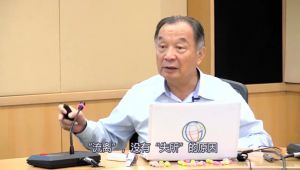
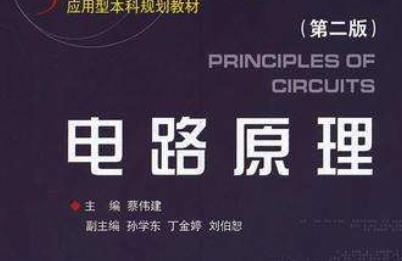
清华大学电路原理课:理工科必备的"电路通关秘籍"
最近很多电气工程和电子信息专业的新生在问:大学第一年最该重点攻克哪门课?作为一个带过十几年实验课的老工程师,我会毫不犹豫推荐清华的电路原理——这门课就像盖房子的地基,打不好后面专业课上起来会非常吃力。
为什么这门课特别值得学?
从直流电路到交流系统,从静态分析到动态响应,96学时的课程内容扎实到能让你对电路系统建立起立体认知。我见过太多同学靠死记公式应付考试,结果做课程设计时连示波器波形都看不懂。而清华的授课团队最擅长把抽象概念转化为工程直觉,比如:
- 用自来水管道比喻电流传输特性
- 通过音响系统讲解滤波器设计
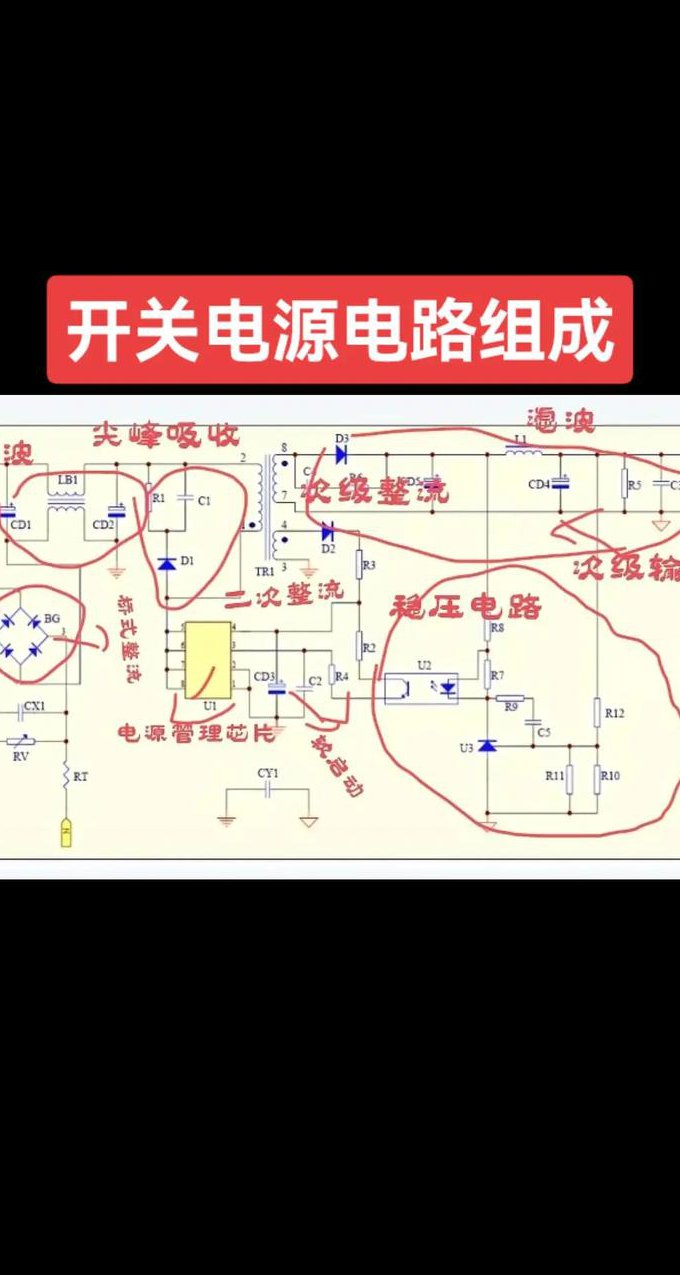
- 用手机充电器拆解实例分析电源模块
课程核心内容解析
第一部分会带你用"电路语言"思考问题,从基尔霍夫定律开始建立系统化分析框架。讲到动态电路时,教授独创的"三要素法"能让你快速搞定时域分析——这可是连很多研究生都在用的解题技巧。
运算放大器那章特别有意思,不仅教你看懂芯片手册,还会带你在仿真软件里搭建实际音频放大电路。去年有学生用这部分知识直接做出了简易心电图仪,拿了校级创新大赛一等奖。
课程精华模块
- 模块1:电路基本语言 支路变量/参考方向/功率计算
- 模块2:动态系统分析 一阶电路三要素/二阶系统响应
- 模块3:工程应用专题 滤波器设计/功率传输/三相电路
适合哪些同学学习?
除了电气、自动化、电子等专业同学必学外,建议计算机专业想搞硬件的同学也重点关注。课程后半段的数字电路基础内容,对理解计算机组成原理特别有帮助。我带的毕设里,凡是电路原理扎实的学生,做嵌入式开发时debug效率能高出3倍不止。

完整知识体系一览
- 第1周:从欧姆定律到网络等效
- 第3周:运放的魔法世界
- 第6周:动态电路的时域密码
- 第9周:正弦稳态分析的工程技巧
- 第12周:三相电与电力系统实践
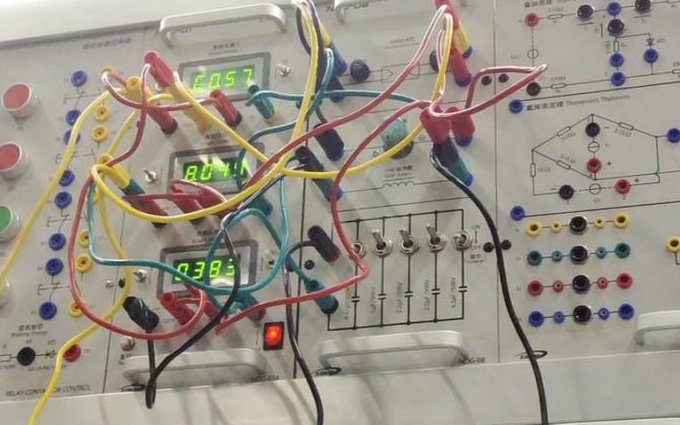
记得我读书时教授说过:"学电路要像学骑自行车,理论懂了还不够,必须亲手搭几个电路烧几个元件才算入门。"现在看清华的课程设计,理论+仿真+实验的三明治教学法确实高明,暑假有空建议提前看看公开课视频,开学直接赢在起跑线上。