- Introduction - Probabilistic and Statistical Machine Learning 2020
- Part 1 - Machine learning and inductive bias
- Part 2 - Warmup- The kNN Classifier
- Part 3 - Formal setup risk consistency
- Part 4 - Bayesian decision theory
- Part 5 - The Bayes classifier
- Part 6 - Risk minimization approximation and estimation error
- Part 7 - Linear least squares
- Part 7a - Introduction to convex optimization
- Part 8 - Feature representation
- Part 9 - Ridge regression
- Part 10 - Lasso
- Part 11 - Cross validation
- Part 12 - Risk minimization vs. probabilistic approaches
- Part 13 - Linear discriminant analysis
- Part 14 - Logistic regression
- Part 15 - Convex optimization Lagrangian dual pro
- Part 16 - Support vector machines- hard and soft margin
- Part 17 - Support vector machines- the dual problem
- Part 18 - Kernels- definitions and examples
- Part 19 - The reproducing kernel Hilbert space
- Part 20 - Kernel SVMs
- Part 21 - Kernelizing least squares regression
- Part 22 - How to center and normalize in feature sp
- Part 23a - Random forests- building the trees
- Part 23b - Random forests- building the forests
- Part 24 - Boosting
- Part 25 - Principle Component Analysis
- Part 26 - Kernel PCA
- Part 27 - Multidimensional scaling
- Part 28 - Random projections and the Theorem of Johnson-Lindenstrauss
- Part 29 - Neighborhood graphs
- Part 30 - Isomap
- Part 31 - t-SNE
- Part 32 - Introduction to clustering
- Part 33 - k-means clustering
- Part 34 - Linkage algorithms for hierarchical cluster
- Part 35 - Spectral graph theory
- Part 36 - Spectral clustering unnormalized case
- Part 37 - Spectral clustering- normalized regularized
- Part 38 - Statistical learning theory- Convergence
- Part 39 - Statistical learning theory- finite function classes
- Part 40 - Statistical learning theory- shattering coefficient
- Part 41 - Statistical learning theory- VC dimension
- Part 42 - Statistical learning theory- Rademacher complexity
- Part 43 - Statistical learning theory- consistency of regularization
- Part 44 - Statistical learning theory- Revisiting Occam and outlook
- Part 45 - ML and Society- The general debate
- Part 46 - ML and Society- (Un)fairness in ML
- Part 47 - ML and Society- Formal approaches to fair
- Part 48 ML and Society Algorithmic approaches to fairness
- Part 49 ML and Society Explainable ML
- Part 50 ML and Society The energy footprint of ML
- Part 51 - Low rank matrix completion- algorithms
- Part 52 - Low rank matrix completion- theory
- Part 53 - Compressed sensing
- Part 54 - ML pipeline- data preprocessing learning
- Part 55 - ML pipeline- evaluation
蒂宾根大学《统计机器学习》课程(2020):从理论到实践的AI核心密码
课程简介
当你打开天气预报App时,有没有想过那些精准的降水概率是如何计算的?这正是统计机器学习的魔法。蒂宾根大学2020年的这门课程,用15周时间带你拆解AI时代最硬核的数学引擎。
课程从基础线性模型出发,逐步深入到贝叶斯网络和深度神经网络。特别值得关注的是第4周"正则化路径"实验课,学生们要亲手在Python中实现Lasso回归的坐标下降算法——当看到参数矩阵随着λ值变化产生的神奇舞蹈时,很多人才真正理解"稀疏性"的奥义。
马克西米利安教授有个经典案例:用kaggle上的信用卡欺诈数据,对比逻辑回归、随机森林和深度网络的ROC曲线。这个贯穿三周的实战项目,让学生们深刻体会到统计学习作为"数据显微镜"的价值——那些AUC提高0.02%的优化,可能意味着每年避免数百万美元的欺诈损失。

课程亮点
1. 三重认知升级
- 视觉化学习:用t-SNE降维展示高维数据分布
- 数学直觉培养:通过几何解释理解核技巧
- 工程思维训练:学习在Spark集群上部署MLlib管道
2. 特色教学环节
每月一次的"算法诊所"让同学们带着自家科研数据来问诊,曾有生物学博士生通过课程学到的混合高斯模型,成功分离了电镜图片中的蛋白质团簇噪声。
课程目录
第一部分:基础篇(1-4周)
- 线性回归的几何重表述
- 偏差-方差困境的蒙特卡洛验证
- 支持向量机的对偶推导实战
- L1正则化的商业应用案例
第二部分:进阶篇(5-10周)
- EM算法在基因测序中的应用
- 马尔可夫链蒙特卡洛采样实验
- 变分推断的厨艺类比教学
- 图模型在社交网络分析中的实践
第三部分:前沿篇(11-15周)
- 注意力机制的可视化解析
- 对抗样本生成实验
- 元学习在医疗影像中的迁移实践
学习收获
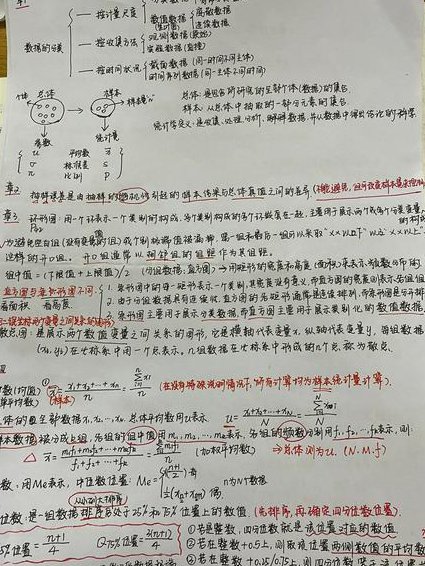
完成本课程后,你将获得:1本手写推导笔记(PDF)、3个可复现的Kaggle级项目、以及最珍贵的——用统计思维看世界的新视角。当你能在面试中脱口而出"贝叶斯优化的获取函数选择策略"时,就会感谢这15周的烧脑时光。
记住课程尾声那句德国谚语:"Wer versteht zu warten, dem kommt die Erkenntnis."(懂得等待的人,终将获得真知)统计机器学习的美妙,正在于它在概率迷雾中点亮的那盏明灯。